
DMT EDUCATION
DMT Cartridge Anatomy: Understanding the Technology Behind Vaporization
Aug
DMT cartridges are a form of vaporization hardware associated with dimethyltryptamine (DMT), a naturally occurring psychedelic compound that has been studied for its effects on perception, brain activity, and consciousness. While discussions about DMT often concentrate on its pharmacology and subjective effects, the physical technology used for vaporization is another important part of understanding the subject.
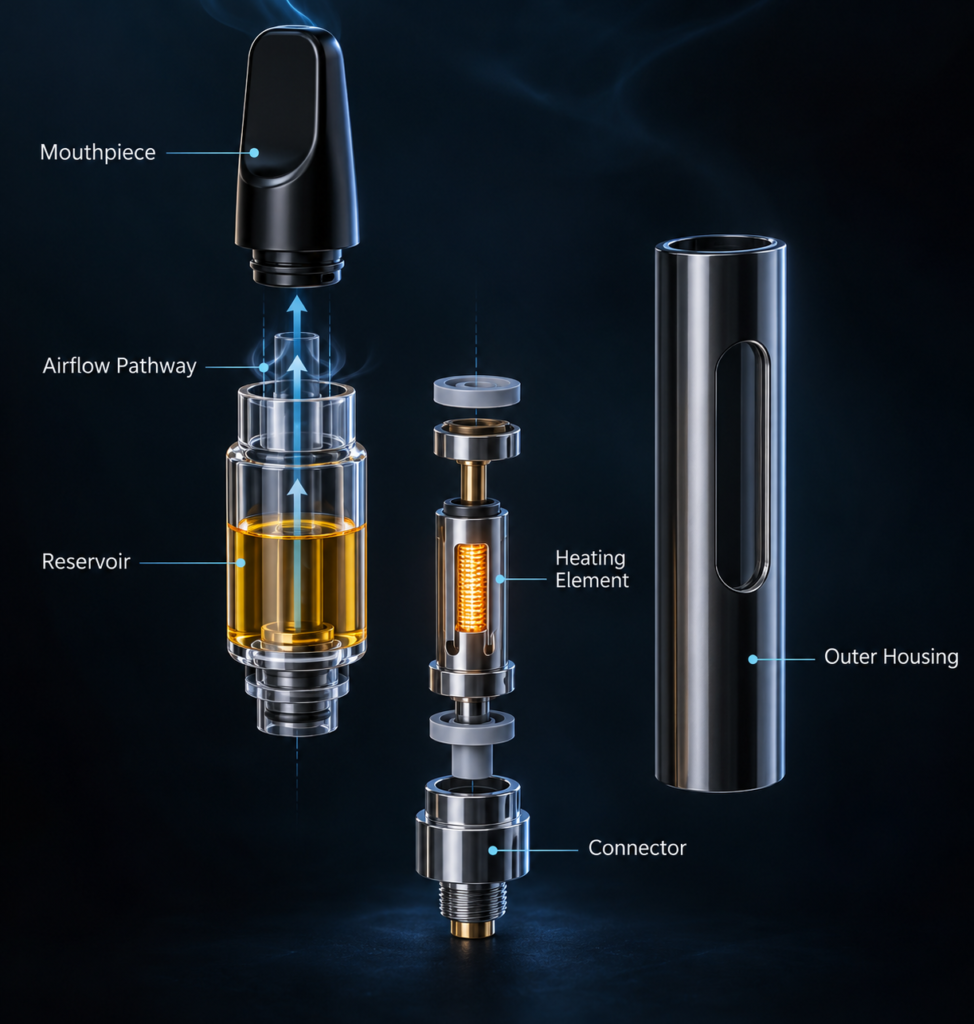
A DMT cartridge is more than simply a small container. It is a compact system that combines a reservoir, liquid-transfer components, a heating element, an airflow pathway, and an external housing. These parts work together to transform a liquid material into an aerosol.
Understanding DMT cartridge anatomy can therefore provide useful technical context for readers interested in vaporization technology, cartridge construction, and psychedelic research. This article examines the major components and explains their general roles from an educational and scientific perspective. DMT cartridge anatomy
What Is a DMT Cartridge?
A DMT cartridge is a compact cartridge-based vaporization device associated with DMT-containing liquid formulations. The cartridge contains a reservoir and internal components designed around the general process of liquid storage and aerosol generation.
The term DMT cart is commonly used as a shortened form of DMT cartridge. Although cartridge designs can differ considerably, most systems are built around several fundamental functions: storing liquid, transferring liquid toward a heating element, generating an aerosol, and directing that aerosol through an airflow pathway.
From an engineering perspective, the cartridge can be viewed as a small integrated system rather than a single component. The reservoir provides containment, the internal delivery system manages movement of liquid, and the heating element provides the thermal energy required for vaporization.
Different cartridge designs can use different materials and internal structures. Glass, metal, ceramic, and polymer components may appear in various parts of cartridge systems, depending on the design.
This variation is one reason why DMT cartridge anatomy is worth examining separately from the chemistry of DMT itself. The chemical compound and the hardware used for vaporization are two different aspects of the overall system. DMT cartridge anatomy
The Main Components of a DMT Cartridge | What does a DMT cart look like
Although cartridge designs vary, several components appear repeatedly across cartridge-based vaporization systems.
Liquid Reservoir
The reservoir is the section responsible for containing the liquid formulation. It forms the central storage area of the cartridge and is typically enclosed by the cartridge housing.
Glass is commonly used in cartridge reservoirs because it can provide a stable physical container and allows the contents to remain visible. Other materials may also be incorporated into cartridge construction.
Heating Element
The heating element is responsible for converting electrical energy into heat. This is the component associated with the transition from liquid material to aerosol.
Heating technology can differ between cartridge designs. Some systems use resistive heating elements, while other modern vaporization technologies may incorporate ceramic-based components or other heating structures.
Liquid-Transfer System
A cartridge also requires a mechanism through which liquid can reach the heating area. Depending on the design, this may involve a wick, porous material, ceramic structure, or another form of liquid-transfer system.
The relationship between the reservoir and heating element is an important part of cartridge engineering because the liquid must reach the heating region for aerosol generation to occur.
Airflow Pathway
The airflow pathway provides the route through which generated aerosol travels toward the mouthpiece. Internal airflow design can differ between cartridge models and can influence the physical characteristics of the aerosol produced by the system.
Mouthpiece
The mouthpiece is the upper portion of the cartridge through which the aerosol exits. It is generally designed to provide a defined outlet while also forming part of the cartridge’s overall enclosure.
Connector
The connector provides the physical and electrical interface between the cartridge and its compatible power source. Some cartridge systems use standardized threaded connections, while others use proprietary designs.
Because connectors can vary, cartridge hardware should be understood as a complete system rather than assuming that every cartridge uses the same architecture.
dmt cartridges | x pills for sale | dmt vapes for sale | buy blue dolphin ecstasy pills | buy dmt online | buy dmt carts online | nn dmt for sale | buy dmt carts | psychotria viridis leaves for sale | dmt cart price | chacruna leaves for sale | buy mdma crystals online | dmt 1ml purecybin – 700mg dmt | dmt powder for sale | buy dmt | 5-meo-dmt buy | order dmt online | buy dmt crystals online | buy blue crystal meth online | buy dmt vape juice online | rolls royce pill | dmt cartridge and battery | buy pure dmt | buy ketamine type s
How DMT Cartridge Components Work Together
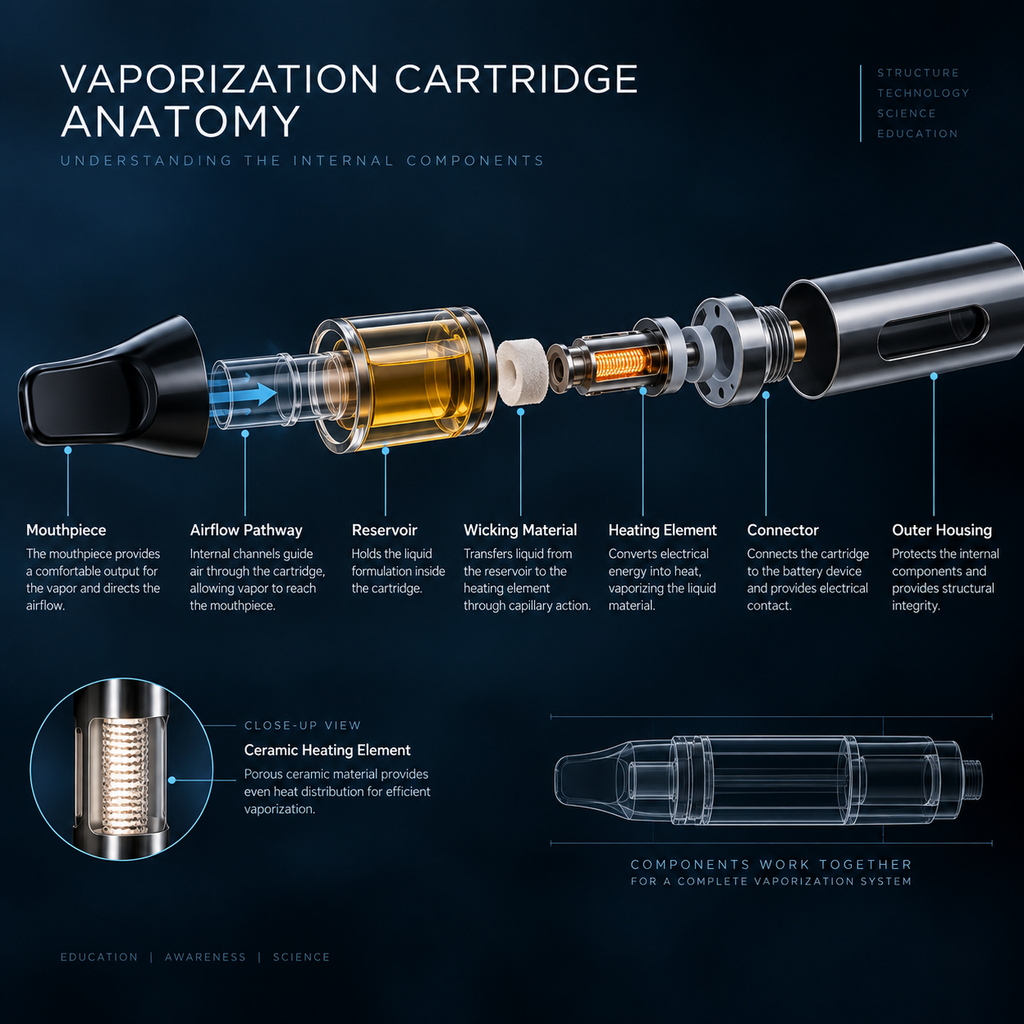
The individual components of a cartridge are designed to function as a connected system. The reservoir, liquid-transfer structure, heating element, airflow pathway, and mouthpiece each perform a different role, but their functions are closely related.
The process begins with the liquid material being contained within the reservoir. From there, an internal transfer mechanism allows material to reach the region surrounding the heating element. When electrical energy is converted into thermal energy, the heating element produces the conditions necessary for aerosol formation.
The resulting aerosol then moves through the cartridge’s internal airflow pathway before reaching the mouthpiece. This makes airflow another important part of the overall cartridge architecture.
From a technical perspective, this can be simplified into four basic stages:
Storage → Liquid transfer → Heat generation → Aerosol movement
Each stage depends on the surrounding components. The reservoir must contain the material, the internal structure must facilitate liquid movement, the heating system must generate heat, and the airflow pathway must provide a route for the resulting aerosol.
This interconnected design is why DMT cartridge technology involves more than the heating element alone. Cartridge performance and construction are influenced by the interaction between multiple physical components.
It is also important to distinguish between vaporization and aerosol generation. In everyday discussions, the terms “vapor” and “vaporization” are frequently used broadly, but technically, electronic cartridge systems can produce an aerosol containing vapor-phase and condensed material. The exact composition depends on the physical and chemical characteristics of the formulation and the conditions under which aerosol formation occurs.
Materials Used in DMT Cartridge Construction
Materials are another important aspect of cartridge anatomy. Different sections of a cartridge can use different materials depending on their mechanical, thermal, and chemical requirements.
Glass
Glass is frequently associated with cartridge reservoirs because it provides a transparent container and can offer useful chemical-resistance characteristics. Transparency also makes it possible to visually inspect the reservoir.
Ceramic
Ceramic materials can be incorporated into heating or liquid-transfer components. Their thermal characteristics make them relevant to modern vaporization hardware, particularly in designs that use porous ceramic structures.
Metal
Metal may appear in connectors, structural components, heating elements, and other parts of cartridge hardware. Different metals have different electrical and thermal properties, making material selection an important engineering consideration.
Polymers
Certain plastics and polymer-based materials may be used for external housings, seals, mouthpieces, or other structural components. Their properties can include low weight, ease of manufacturing, and resistance to physical impact.
Seals and Insulating Materials
Small sealing and insulating components are also important even though they may not be immediately visible. Seals can help separate different sections of a cartridge, while insulating materials can help manage electrical connections and prevent unwanted contact between components.
The choice of materials therefore contributes to the overall architecture of a cartridge. DMT cartridge components are not necessarily made from one material; instead, different materials may be selected for different technical functions.
When studying cartridge construction, material compatibility is particularly relevant from a scientific perspective because the interaction between a stored liquid and the surfaces surrounding it can influence the physical characteristics of the system.
What Is Inside a DMT Cartridge?
Understanding what is inside a DMT cartridge starts with looking at the cartridge as a collection of interconnected components rather than a single piece of hardware.
The main elements generally include a liquid reservoir, heating element, liquid-transfer structure, airflow pathway, mouthpiece, and connector. Each component has a specific function within the overall cartridge structure.
The reservoir provides a contained space for the liquid formulation, while the liquid-transfer system connects the stored material with the heating area. The heating element provides thermal energy, and the airflow pathway provides a route for the resulting aerosol to move through the cartridge.
The external housing holds these components together and can also provide protection for the internal system. Depending on the cartridge design, some components may be visible while others remain enclosed within the housing.
This explains why searches such as “what is inside a DMT cartridge” and “what are the parts of a DMT cartridge” can be approached from an engineering perspective. The answer involves several different pieces working together rather than one specific component.
How Does a DMT Cartridge Work?
At a general level, a DMT cartridge works through the interaction of liquid storage, heat generation, and airflow.
The liquid material is held within the reservoir. An internal delivery structure allows material to reach the heating region, where electrical energy is converted into heat. The resulting aerosol then travels through the internal airflow pathway toward the mouthpiece.
This sequence can be represented simply as:
Reservoir → Liquid transfer → Heating → Aerosol formation → Airflow
The exact architecture can vary between cartridge designs. Differences in heating technology, reservoir materials, internal airflow, and component arrangement can produce differences in the physical behavior of the system.
It is therefore useful to think of DMT cartridge technology as a combination of mechanical, electrical, thermal, and material considerations.
From a scientific standpoint, the cartridge is the delivery hardware, while DMT’s pharmacological properties belong to a separate area of study. Keeping those two subjects distinct makes it easier to understand both the technology and the underlying science.
DMT Cartridge Design and Airflow | How to make a DMT Cart
Airflow is an often-overlooked part of DMT cartridge design. Inside a cartridge, air needs to travel through a defined pathway before reaching the mouthpiece.
The shape and arrangement of this pathway can differ between cartridge architectures. Internal passages, seals, openings, and the position of other components can all contribute to the overall airflow structure.
The airflow pathway also interacts with the heating system and aerosol produced within the cartridge. For this reason, cartridge anatomy cannot be understood by examining the reservoir or heating element alone.
Studying DMT cartridge airflow is therefore useful for understanding how different pieces of cartridge hardware function as a complete system.
DMT Cartridge Technology: The Bigger Picture
DMT cartridge technology brings together several areas of engineering, including electrical conductivity, thermal transfer, material selection, liquid containment, and airflow management.
The reservoir needs to contain the formulation, the internal components need to remain structurally connected, the heating system needs to convert electrical energy into heat, and the airflow system needs to provide a pathway through the device.
These functions demonstrate why apparently small components can be important when studying DMT cartridge components and their overall structure.
At the same time, cartridge technology should not be confused with the pharmacology of DMT. Research into DMT’s interaction with the brain is a separate scientific field involving neuroscience, pharmacology, and psychology.
Understanding both areas provides a more complete picture: the cartridge explains the technology, while pharmacological research explains the substance’s interaction with biological systems.
What Research Says About DMT Vaporization
Scientific research into DMT has examined its pharmacology, metabolism, subjective effects, and interaction with the brain. Research involving inhaled or vaporized DMT has also helped scientists investigate how rapidly the compound can enter the body and how its effects relate to its pharmacological properties.
From a technology perspective, however, it is important to separate research on DMT itself from research on particular cartridge designs. A cartridge is a piece of delivery hardware, and different hardware configurations can vary in their construction and physical characteristics.
This distinction is useful when evaluating information online. Statements about DMT pharmacology do not necessarily describe the characteristics of a particular cartridge, just as information about cartridge hardware does not explain every aspect of DMT’s biological effects.
Conclusion
Understanding DMT cartridge anatomy provides a useful introduction to the technology behind cartridge-based vaporization. A typical system can involve a reservoir, liquid-transfer structure, heating element, airflow pathway, mouthpiece, connector, and external housing.
Each component has a different role, but the components function as an interconnected system. Materials, heating technology, airflow architecture, and cartridge construction can all vary between designs.
For anyone researching the subject, understanding these basic principles provides a foundation for exploring broader topics such as DMT vaporization science, cartridge hardware, DMT pharmacology, and psychedelic research.
Frequently Asked Questions
What are the main parts of a DMT cartridge?
The main components can include a reservoir, heating element, liquid-transfer structure, airflow pathway, mouthpiece, connector, and external housing.
What is DMT cartridge anatomy?
DMT cartridge anatomy refers to the physical structure and components that make up a cartridge-based DMT vaporization system.
What is inside a DMT cartridge?
A cartridge can contain a liquid reservoir, heating components, liquid-transfer materials, airflow passages, and connection hardware enclosed within an external housing.
What is the difference between a DMT cart and a DMT cartridge?
“DMT cart” is generally an informal shortened term for a DMT cartridge. Both terms can refer to the same general type of cartridge-based vaporization hardware.
How does cartridge hardware relate to vaporization?
Cartridge hardware provides the physical system for storing liquid, transferring it toward a heating region, generating an aerosol, and directing that aerosol through an airflow pathway.
Are all DMT cartridges constructed the same way?
No. Cartridge architecture, materials, heating elements, connectors, reservoirs, and airflow designs can vary between different systems.
How much is a DMT cart?
You can find the best prices in our website buyingdmtonline.com
